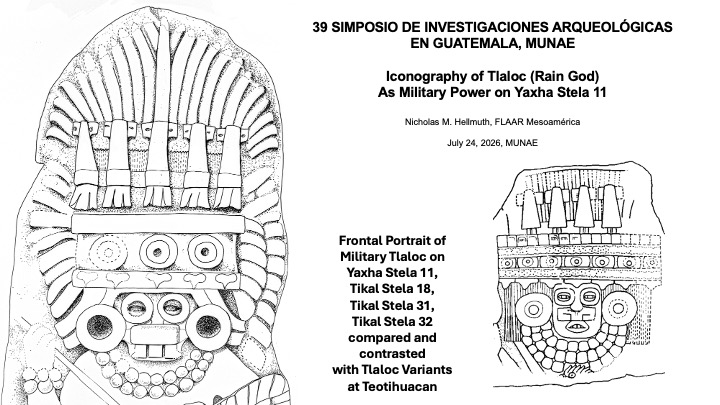
Explore the iconography and significance of Yaxha Stela 11, one of the most remarkable representations of a Tlaloc-associated warrior figure in the Maya area. This presentation examines the monument’s imagery, its relationship with Teotihuacan influence, and the distinctive elements that identify the figure as a powerful warrior king.
Presented by Nicholas Hellmuth for the 39th Simposio de Investigaciones Arqueológicas en Guatemala (SIAG), this research combines detailed photographic documentation and iconographic analysis to provide a closer look at one of Yaxha’s most intriguing monuments.
Discover the symbolism, visual details, and cultural connections behind Yaxha Stela 11.
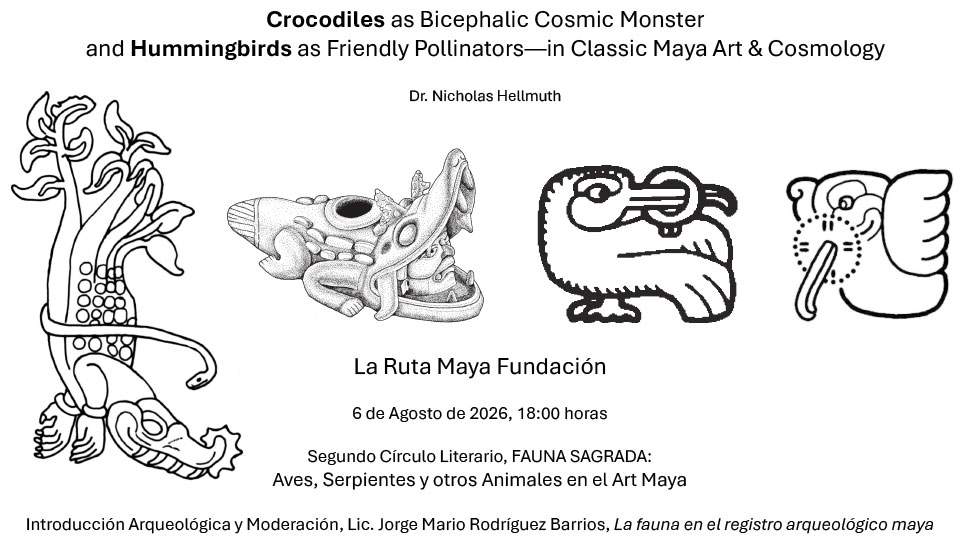
This lecture explores the Hix glyph and its relationship with jaguar imagery, Uinal face variants and Bufo toads in Classic Maya art and hieroglyphic writing.
FLAAR is dedicated to publishing our research reports on flora, fauna, biodiverse ecosystems of Guatemala, plus iconography (symbolism in Maya art) and epigraphy (Maya hieroglyphic inscriptions). Recently we presented an in-depth study of lots of aspects of Maya chocolate for thousands of years, focused on:
Flora: all three species of cacao: Theobroma cacao, Theobroma bicolor (pataxte or balamte), and the rare species Theobroma angustifolium.
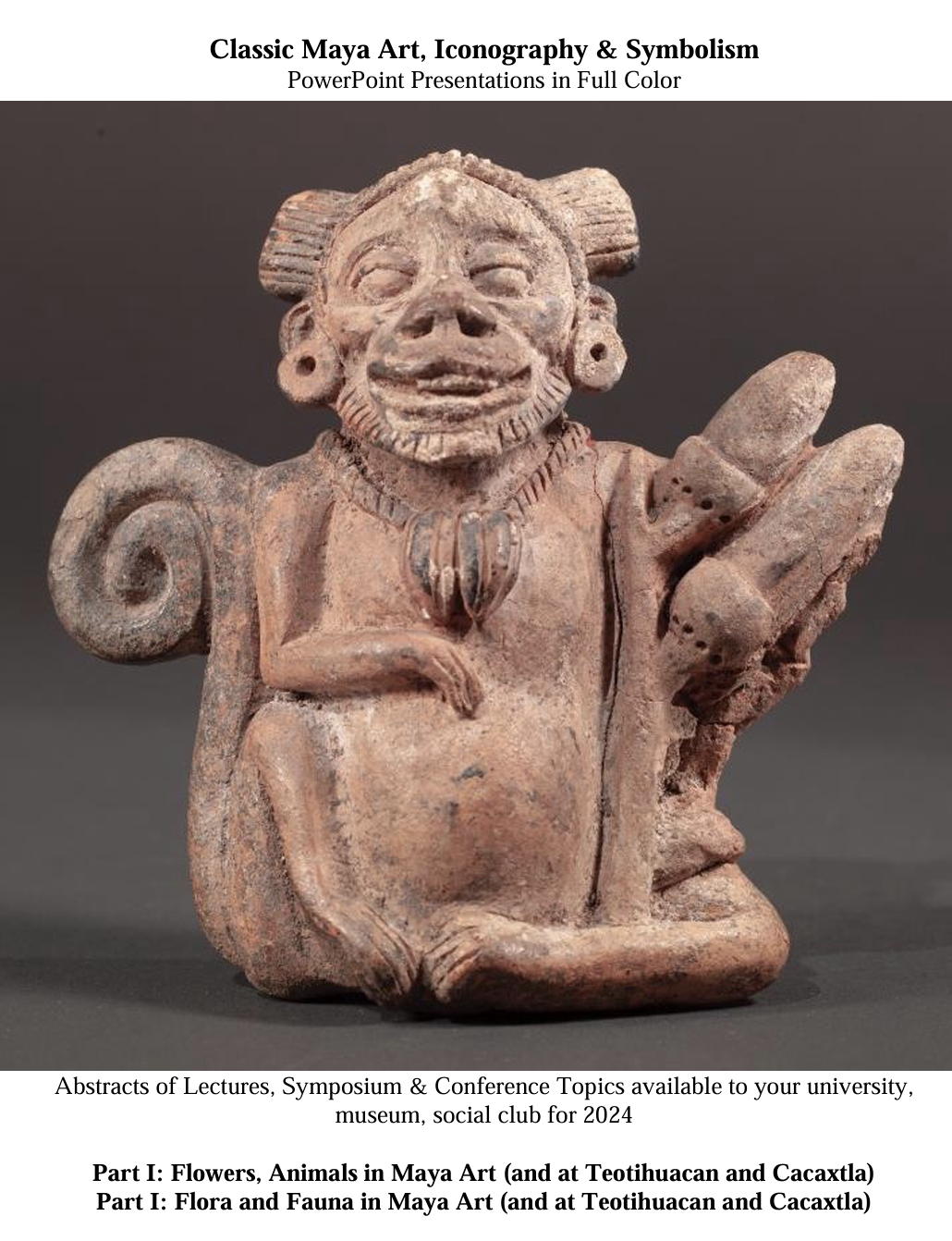
Fauna: squirrels and monkeys love to eat the white sap that surrounds the seeds of Theobroma cacao; and the Maya associated mythical crocodiles with sacred cacao seeds. There are separate FLAAR Reports on iconography of monkeys in Classic Maya art that show spider monkeys with cacao pods.
Iconography: the symbolism of cacao, chocolate, for over a thousand years in Tzakol and Tepeu centuries of the Classic Maya.
Epigraphy: in this lecture by Hellmuth you can learn how the Classic Maya wrote the word kakaw(a)
Archaeology: Hellmuth found cacao seeds in 1965 while excavating inside the Tomb of the Jade Jaguar (Tikal Burial 196) that he discovered below the Tikal pyramid Str. 5D-73, a few meters south of Temple II. Cacao was popular with the Teotihuacanos and the later Aztecs so they came to the Maya areas to obtain the precious seeds of cacao.
So, if you download and read all the chapters you will learn about botany, ethnobotany, Maya hieroglyphic writing, and Classic Maya archaeology.
Maya Cacao Lecture Downloads
Theobroma cacao of the Maya
Botany, Ethnobotany, Archaeology, Epigraphy and Iconography.
Archaeology and Iconography of Theobroma cacao
And Faux Cacao (cacao look-alikes) in Classic Maya Art.
The third species of Cacao Trees in Mesoamerica
Theobroma angustifolium.
Theobroma bicolor
Locally known as either Pataxte (Izabal) or Balamte (Alta Verapaz).
Iconography of the Classic Maya Crocodile Tree
And Stylized Cacao Tree Portraits.
Classic Maya Hieroglyph for Kakaw(a)
Chocolate of the Classic Maya. Archaeology, Epigraphy and Iconography of this Hieroglyph in the Primary Standard Sequence Dedicatory Formula.
Seeds used by Maya People to make Chocolate
This is a preview of further cacao research projects that’s worth downloading even though just a preview. There are several seeds of various different trees in Guatemala that are still used by Maya People to make chocolate when there is no Theobroma cacao available.
Plants used to Flavor Maya Kakaw, Cacao, Chocolate
This is a preview of further cacao research projects that’s worth downloading even though just a preview.
Chocolate in Maya Culture of the Classic through to today
Keep in mind that all chapters together in a single PDF is very heavy.
This PDF is the entire multiple “chapters” of the English original of the lecture at MUNAG.
If you prefer the lectures en español, there are two options:
2nd: all the chapters of the May 2026 lecture at MUNAG, Antigua Guatemala are available as downloads in PDF format en español on www.FLAAR-Mesoamerica.org
Additional FLAAR Reports on Maya cacao, chocolate: especially iconography and ethnobotany
Especially iconography and ethnobotany.
Cacao vs Pataxte
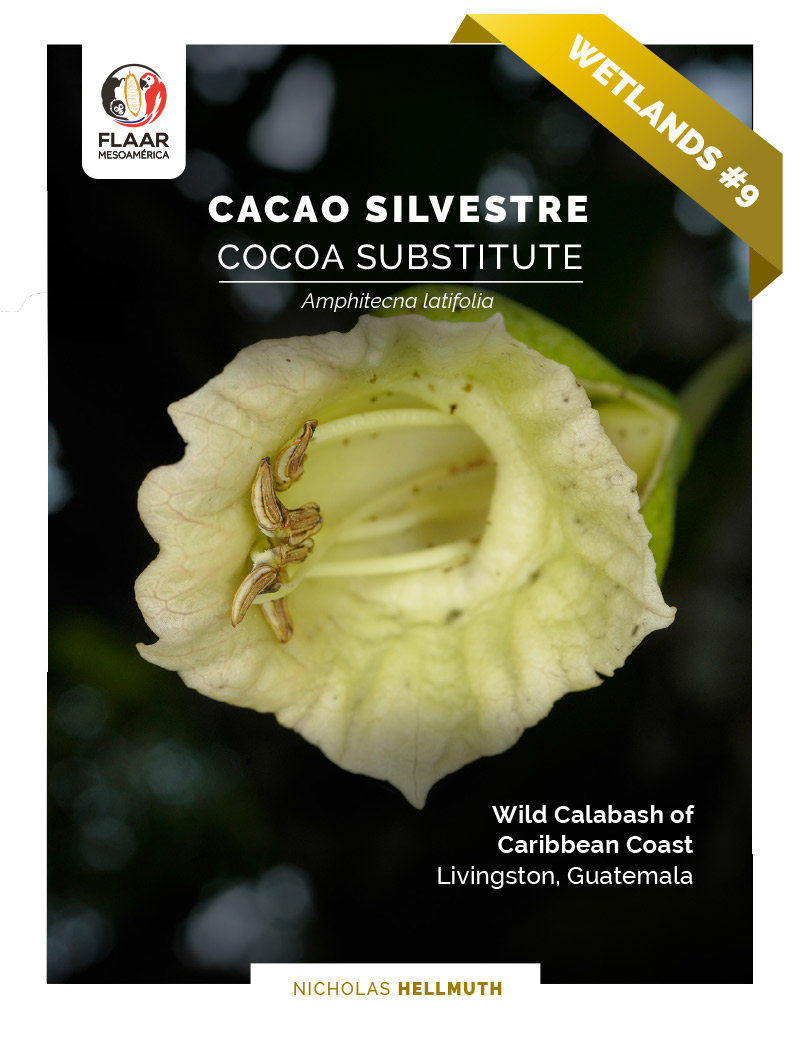
Cacao Silvestre Cocoa Substitute
Classic Maya Art, Iconography & Symbolism
Previews of PowerPoint Presentations in Full Color.
Tomb of the Jade Jaguar
Harvard Honor’s thesis, Nicholas Hellmuth.
We Raise Theobroma cacao in our FLAAR Ethnobotanical Research Garden
We have studied cacao in Tabasco and Soconusco (Chiapas), taking photos for all three editions of Sophie Coe and Michael Coe’s book on cacao, The True History of Chocolate. We have studied cacao across Guatemala and in the village of Copan Ruinas, Honduras. Since Theobroma cacao is the least studied, we have been accomplishing field trips to study balamte in Alta Verapaz still during 2026.
Acknowledgements and Appreciation
We thank Licda. María Antonieta Godoy Muñoz (Administradora de MUNAG) and Jimmy Isaí Caal Estrada (Curaduría en arqueología for MUNAG) for the invitation to give a lecture on MAYA CACAO at MUNAG (Museo Nacional de Arte de Guatemala, Antigua Guatemala). We first knew Jimmy Estrada from his photography at Fundacion la Ruta Maya and his capability to make rollouts of Maya vases, so several years ago we invited Jimmy on one of our research trips to Copan Ruinas, Honduras, to accomplish rollouts of vases there.
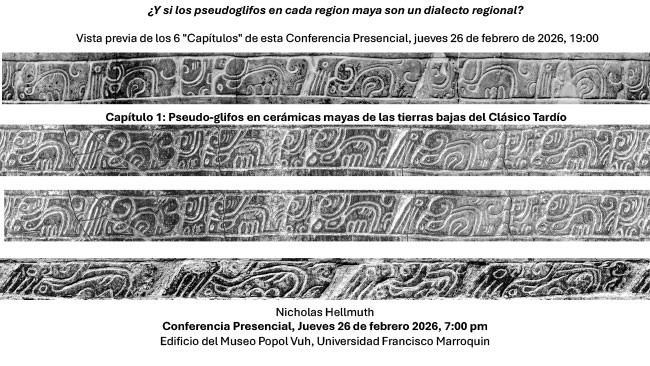
The over hundred pages of this presentation are a further example of our goal to make abundant research material available to students and scholars. These six chapters are FILLED with helpful photographs both of hieroglyphs and also the scenes below the glyphs. So this corpus is for the general public in addition to iconographers, epigraphers, linguists and archaeologists.
Maya Pseudo-Glyphs deserve a new PhD dissertation by a student who would like to make breakthroughs in epigraphy—since 90% of research on glyphs on vases, bowls and plates have understandably focused on the PSS (Primary Standard Sequence dedicatory formula).
Although the presentation will be in Spanish, all six chapters will also be available as downloads in English after the lecture date.
This presentation has hundreds of rollouts of Maya vases, several of which are digital rollouts by Nicholas Hellmuth which have never been published before.
So download the Preview now, and then return to this site to download all six chapters during the first week of March.
Posted January 09, 2026 Written by Nicholas Hellmuth
We focus on flora and fauna associated with national parks of today and plants and animals in the ceramics and stone sculptures of the Classic Maya. So for insects we are studying giant beetles that are in Tepeu 1 polychrome bowls and plates, plus large beetles that are edible, plus lightning bugs (firefly) that are featured in Maya myths of the sacred Popol Vuh.
We continue research on bats in Maya art together with chiropterologist Jose Octavio Cajas.
For plants we are continuing our long-range research concept of Palm Paradise Peten, especially palms with edible parts that don’t require destructive slash-and-burn milpa agriculture.
For archaeology we focus in iconography, epigraphy, cosmology of scenes in Classic Maya art, especially scenes with plants and animals.
You can see our past, present, and future research on:
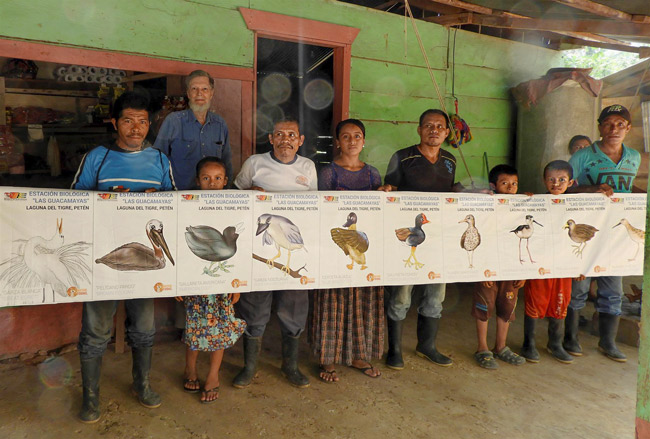
Our goal is to make documentation available to students (especially for their thesis or PhD dissertation), to scholars (for their classroom lectures, symposia and conference presentations, and for their publications) and for the interested general public so they have reliable documented information on Mesoamerica.
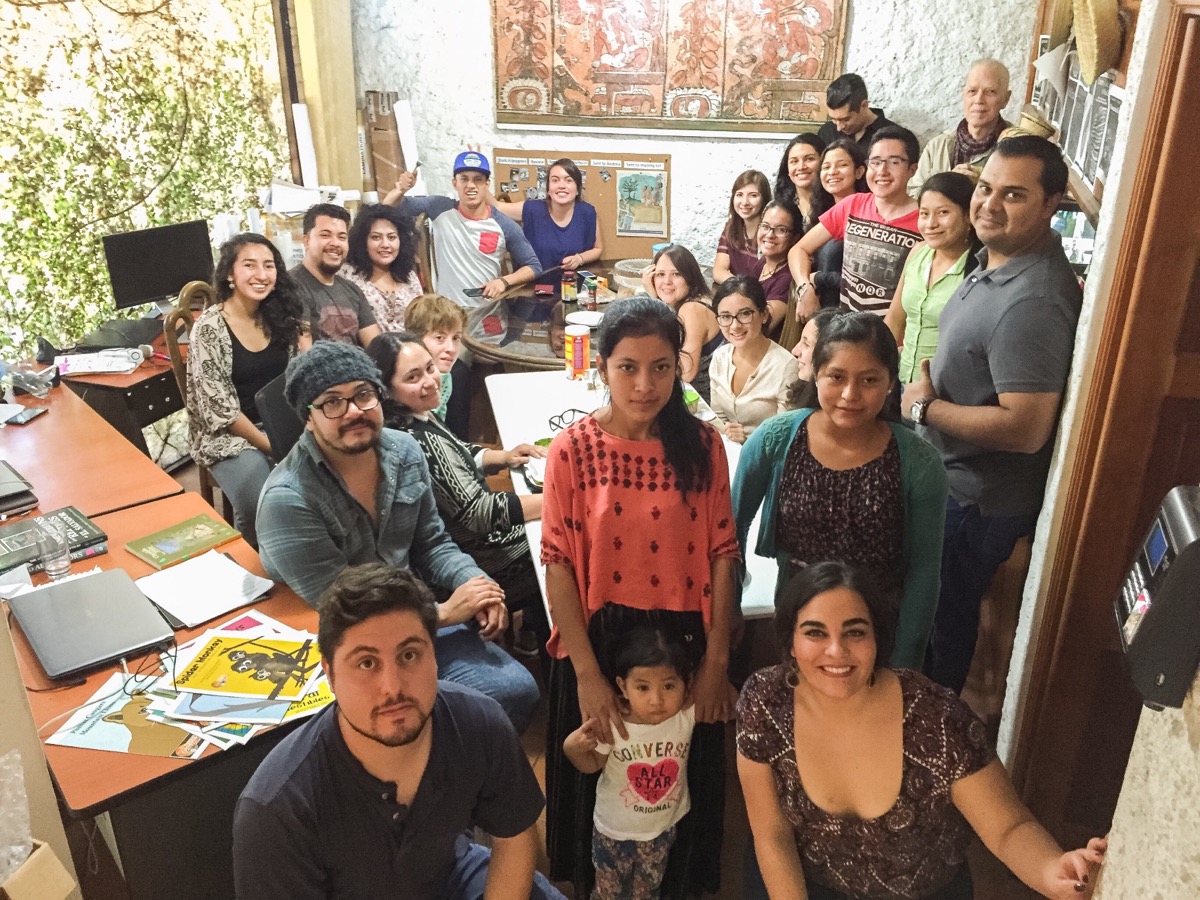
For social media posts, you can find the work of director Vivian Hurtado on FLAAR-Mesoamerica.org and social media sites.
Posted December 24, 2025 Written by Nicholas Hellmuth
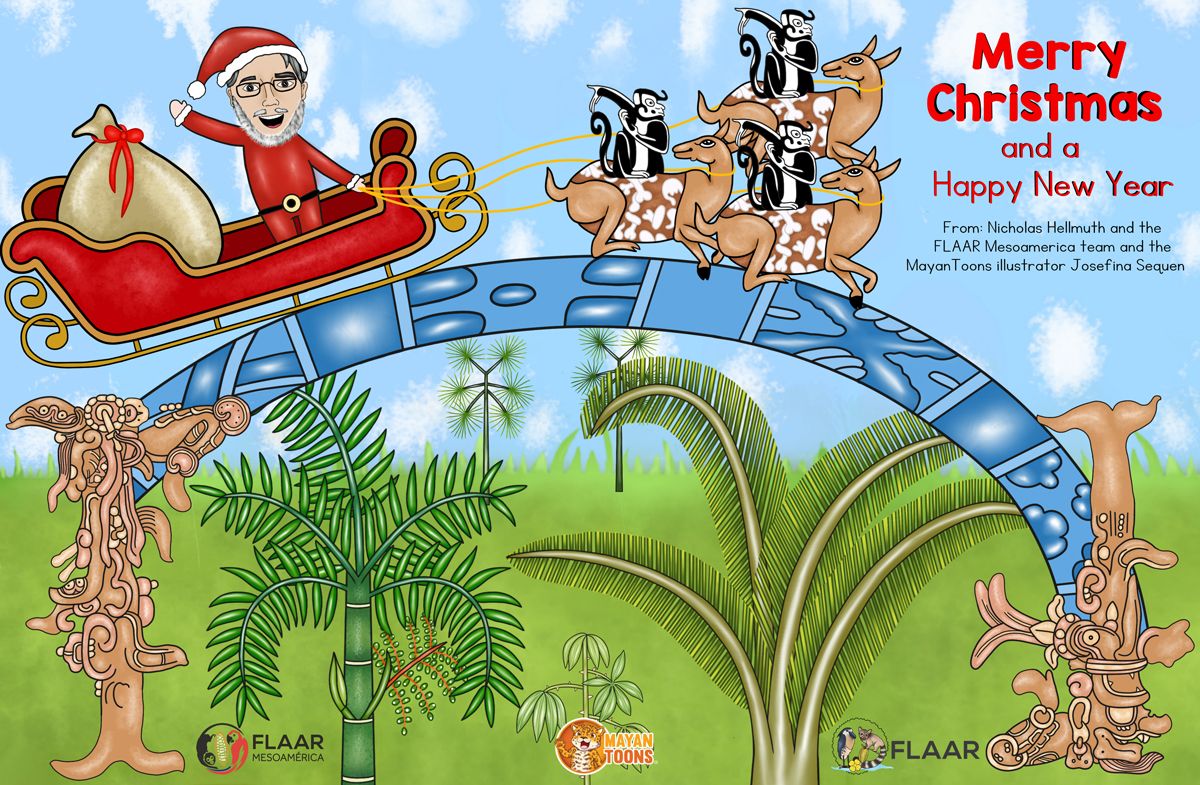
This is "Santa Nicholas" being pulled by native deer of Guatemala. The same species of deer that are common throughout the USA are also native and wild even in the rain forests of Guatemala. In Classic Maya art deer are often associated with monkeys—some Maya portraits of deer feature an obvious monkey tail on the deer. And paintings of monkeys often show them with deer antlers and deer ears.
The circular path is the Maya Sky Band with celestial motifs. We have published many PDFs on this topic. Just Google Sky Band Hellmuth FLAAR.
Often the Sky Band is the body of a Bicephalic Cosmic Monster, with "starry-eyed" deer at the left and an upside-down Quadripartite Badge Headdress monster at the right. Just Google Bicephalic Cosmic Monster, crocodile lecture, Hellmuth and you will see lots of Maya art with this cosmic monster.
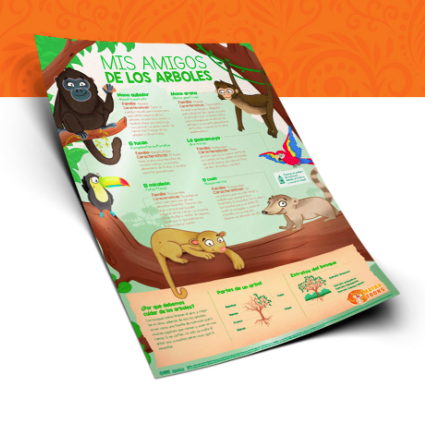
For year 2026 we will continue with new iconography reports on deer, on monkeys, on bats, on rabbits, on macaws and fish and other native fauna featured in Maya art at the national museum of art and ethnology of Guatemala. The goal is to prepare educational material for the literally hundreds of school groups that visit the museum every month plus the thousands of tourists who also visit this prestigious national museum.
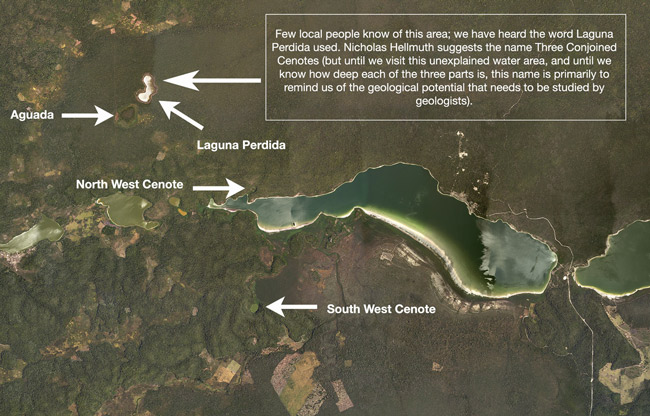
Simultaneously, we will be engaged in field trips and library research on flora, fauna and biodiverse ecosystems of the Reserva de la Biosfera Maya, RBM, Peten, especially of Parque Nacional Yaxha, Nakum and Naranjo (PNYNN) and surroundings.
We now have a new Mavic 4 Pro drone whose aerial camera is significantly better than all previous models that we had in recent years. Most importantly for working in national parks, the Mavic 4 Pro can be flown at eye-level through the forest—so we can show eye-level views in addition to the obviously important aerial views from above.
We also continue our long-range research project on all the hundreds of wild plants, native to Guatemala, have edible parts. With the help of the Q’eqchi’ Maya team that work with us, we are preparing FLAAR Reports on several wild plants of the cloud forests of Alta Verapaz that produce edible food without needing slash-and-burn milpa agriculture.