Several weeks ago we visited one of the factories of the international printer manufacturer EFI VUTEk to test the print quality of their newest super-wide roll-to-roll UV-curing inkjet printers (especially the efi VUTEk D3r).
To judge the capability of this UV-curing ink technology to be able to producing a diverse range of colors we use designs from the MayanToons division of FLAAR Mesoamerica (a division of FLAAR and FLAAR-REPORTS).
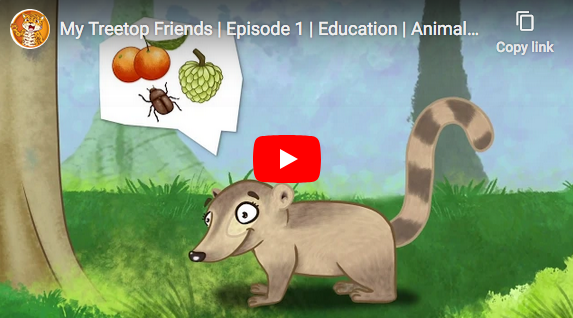
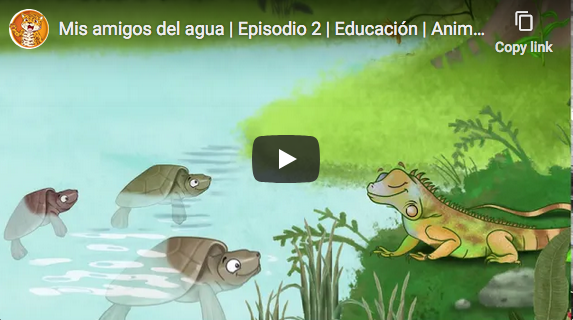
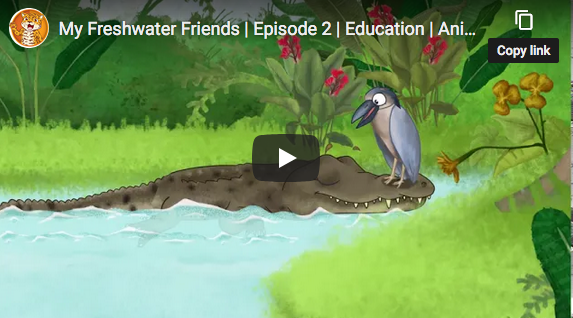
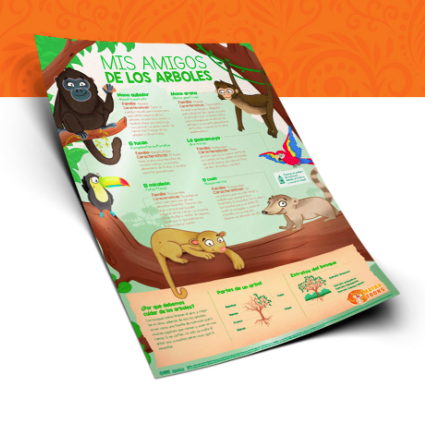
These prints show the native mammals of the Neotropical rain forest of Guatemala and adjacent countries. One of our goals is to encourage people to protect the endangered species and to preserve the rain forests.
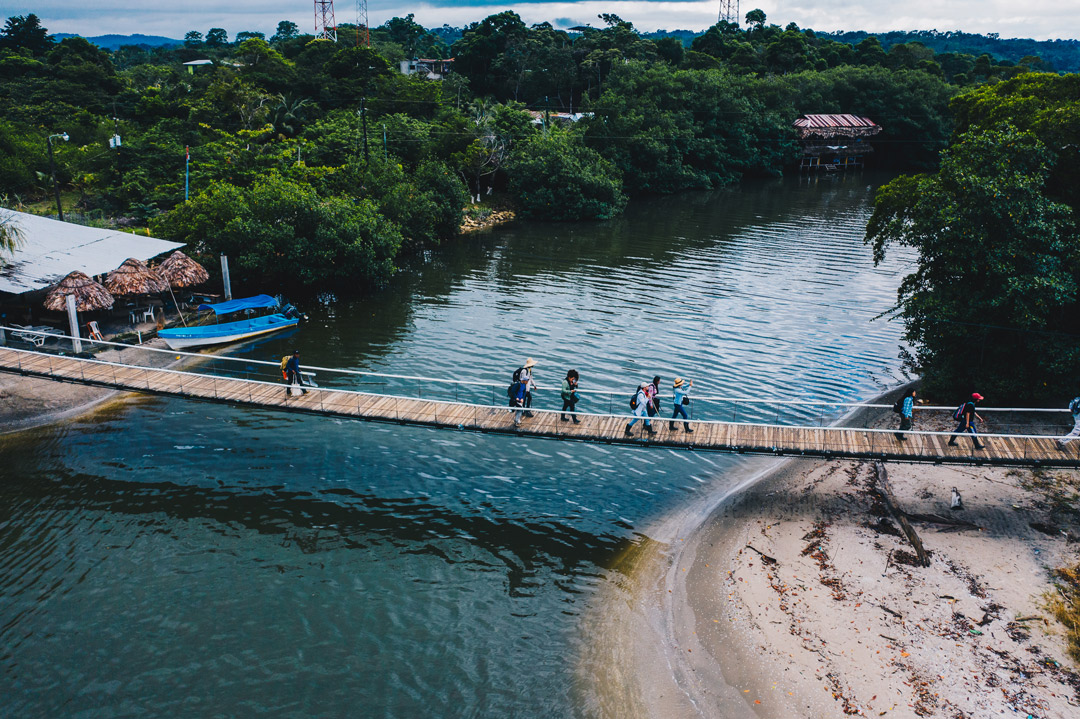
This school is for the settlement of Plan Grande Tatin, of the Municipio of Livingston, Departamento of Izabal, Guatemala, Central America. To reach here requires a 4-wheel drive pickup truck for an hour or so.
All the people here speak Q’eqchi’ Mayan language, so we go with one of our in-house Q’eqchi’ Mayan staff. We also have staff that speak Kaqchiquel Mayan and other staff that speak Pokomchi Mayan. There are about 21 Mayan languages in Guatemala, plus Xinca and Garifuna.
We are now preparing our next generation educational material to add Garifuna, as this is one of the languages spoken in the town of Livingston: people here speak Spanish, Garifuna and/or Q’eqchi’ Mayan.
The students also like to learn English, so we include English in the captions on our infographic posters that we prepare for the schools.
This is the print on the efi VUTEK D3r super-wide (3.2 meter wide) printer in the factory.
Normally we go to printer and visual communication trade shows around the world (for over 20 years). But it helps to visit the factory and do print samples in the demo room to really judge the quality of a printer and its ink.
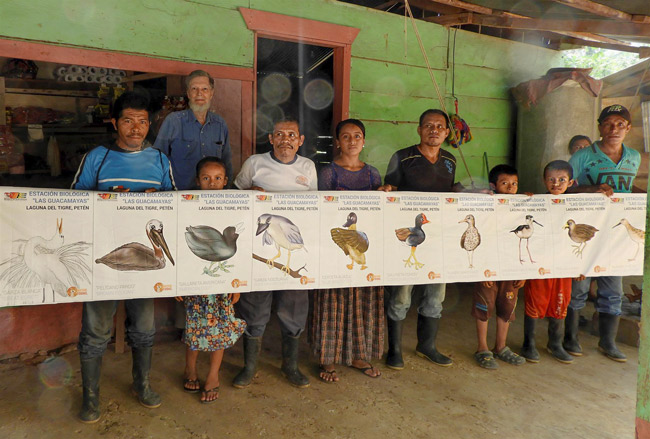
We (FLAAR from USA and FLAAR Mesoamerica in Guatemala) have been donating educational material to schools of Q’eqchi’ Mayan students in remote areas of Guatemala over the recent three years. We will now prepare additional material in Garifuna language, one of the three languages spoken in the Municipio of Livingston (Spanish, Q’eqchi’ Mayan, and Garifuna).
We visited the school in the village of Plan Grande Tatin in early March (an hour in 4-wheel drive pickup truck from the town of Livingston). On this first visit the school teachers, the parents, and the village elders asked if we could help (the primary school teacher was no longer available and they need a new individual to be assigned as soon as possible). So I decided that at least we should return to the school and donate basic educational material; so we drove back in 4WD pickup truck several days later and we donated the samples that we happened to have with us.
Dr Nicholas Hellmuth, FLAAR, donating ABC learning aids to Qeqchi Mayan school Plan Grande Tatin, Municipio de Livingston, Izabal, Guatemala, Central America.
The natural beauty of the surrounding rain forest is clearly visible behind the local house in the background.
These letters are printed on rigid material to survive in the schools for several years. We thank Mutoh USA for printing these and donating them to FLAAR so we could donate them to Mayan schools in remote areas of Guatemala.
The school kids had a lot of smiles as they ran around to put the letters in alphabetical order.
In 20 years of doing print samples at wide-format inkjet factories and demo rooms around the world, all the media and substrates have been white. Here in the EFI VUTEk factory they also did print samples on solid black PVC and solid red material. When you go to a printer/signage trade show you can see all the other solid colors that are available options. The benefit of UV-curing in is that you can print on all these vinyl materials.
So I show the red and black samples here. Plus a print on transparent material (the D5r and D3r can have both clear and white ink available for your designs; the white is obviously essential for printing on transparent material).
The designs are from the MayanToons division of FLAAR Mesoamerica which is a division of FLAAR. FLAAR-REPORTS is also a division of FLAAR Mesoamerica. Mesoamerica is the word for the areas of the Americas influenced by the Olmec, Aztec, Maya, Teotihuacan, and Toltec civilizations for thousands of years. Our main office is in Guatemala, on the ancient trade routes of all these civilizations in past millennia.
MayanToons prepares educational material for local schools in rural areas up in the mountains and in the rain forests. All the print samples we will take to these schools and donate to them. We thank Hanan Yosefi and Tomer Ohavi for the invitation to visit the factory and demo room; we thank the printer operator Liron Cohen for doing the prints.
Rather than accept a PR release from a manufacturer, the more realistic way to know whether a product is good, or not, is to make the effort to do a print test (preferably with your own files).
So at PRINTING United 2019 and also at SGIA 2018 we did test prints on a Konica Minolta Accurio Wide 200 printer (with transport-belt for roll-to-roll; can also do thick and rigid materials).
I must admit I learned a lot about these printers during this process. This is why, for over 20 years, my evaluation style is not to write about a product we have not seen in-person.
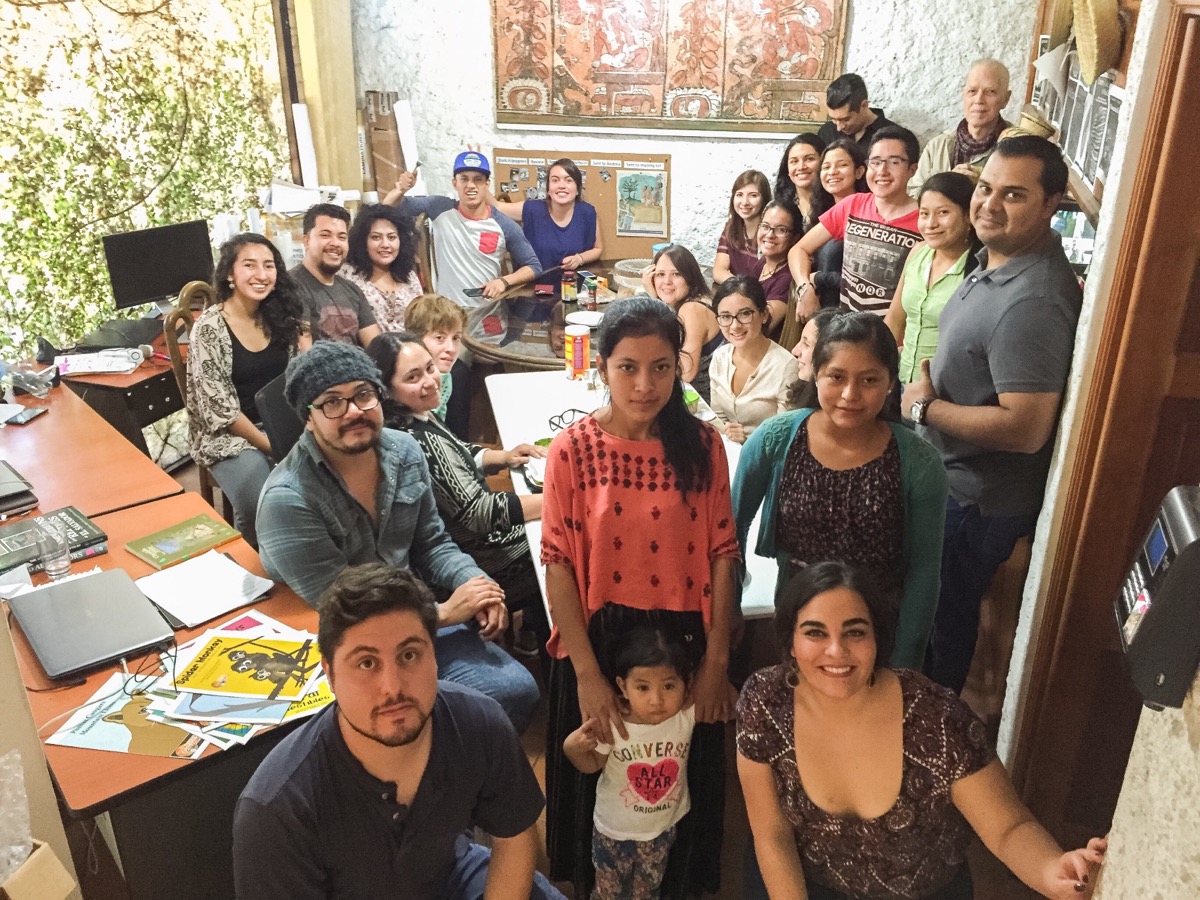
So here are two different FLAAR-REPORTS, each showing all the print results, analyzed in our office by Dr Nicholas (Hellmuth) and Jose Melgar (UV-curing printer Review Editor). After the prints are done at the expos, I fly them back to the office. After we study them, we donate the prints to local schools in rural areas of Guatemala, to national parks in the jungle areas of Central America, and to non-profit organizations.
We prepared our holiday season message by writing the words with chile chocolate on top of a bed of cacao beans. We bought these in the Q'eqchi' Mayan markets of Coban, Alta Verapaz, Guatemala, last weekend.
Chile chocolate is a special chile used to flavor Maya cacao drinks. The cacao beans from Theobroma cacao trees are the source of cocoa, used to make chocolate. Probably most cocoa today is raised and harvested in Africa but cacao trees are native to southern Mexico, adjacent Guatemala and nearby countries.
Both the Maya, Aztec, Zapotec, Mixtec and everyone else in Mexico, Guatemala, Belize, Honduras, etc. all grew and drank liquids made with cacao. Several dozen other plants were used as flavorings. We have worked for many years to find each plant. We did this because the last time I spoke with Yale University professor Dr. Michael Coe, he said that if he had time to rewrite his cacao book he would do much more research on all the flavorings. So I accepted this as an inspirational challenge. FLAAR (USA) and FLAAR Mesoamerica (Guatemala) now have one of the largest photo archives in the world of the flowers, seeds, and other plant parts used to flavor cacao of the Aztec, Maya, and their neighbors.
If a chocolate or cacao or cocoa company is interested in a joint project, we have enough material for five volumes, coffee-table book style, with high-resolution digital photographs. We would like to show the world lots of new options for flavoring cocoa. And we would like to help preserve the Maya and Mesoamerica cultural heritage since each year in the Mayan markets fewer and fewer of these flavorings are being sold.
FLAAR has many research and educational products underway. Since we have 20 years experience with wide-format inkjet printer digital technology we share this knowledge with the FLAAR Mesoamerica teams that study Neotropical flora, fauna, and ecosystems (especially of Guatemala, Central America).
So here are three different FLAAR REPORTS that you can download; each edition is for different areas of focus.
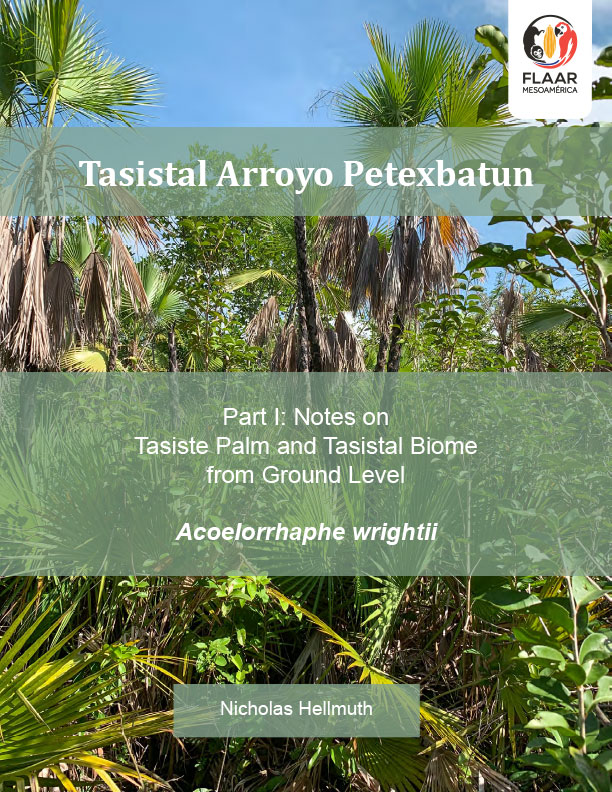
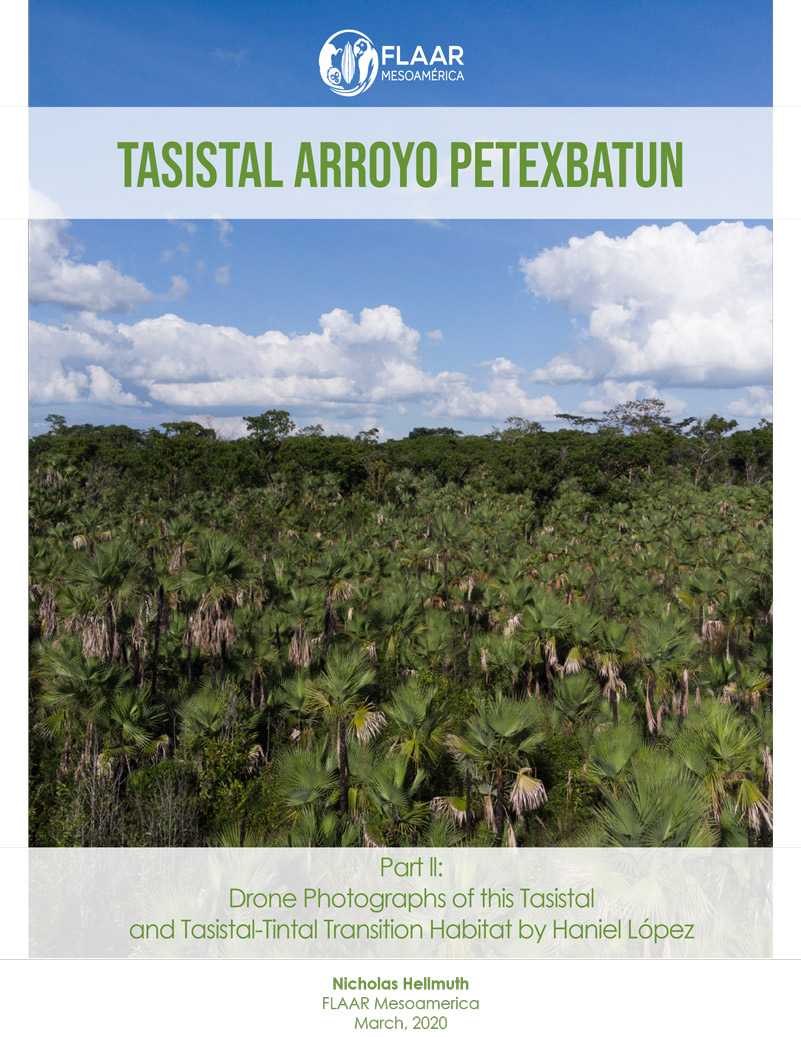
If you are a botanist, ecologist, archaeologist, and especially if working in Mesoamerica, this report is for you.
If you are in the world of wide-format inkjet printing, this report reviews banding, edge splatter, and what colors a UV-curing printer can, or cannot achieve.
If you are working to help schools anywhere that Spanish is a local language, this .pdf shows you how banners can help teach school kids ABCs and lots of other basics.
Horacio Palacios knows the plants and insects in many parts of Parque Nacional Yaxha Nakum Naranjo. He has worked many years finding and mapping satellite sites of Naranjo (and other parts of the park) with Arqla. Vilma Fialko and Arquitecto Raul Noriega.
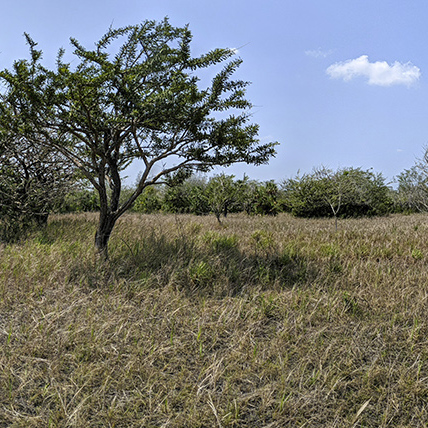
But now, with the cooperation of FLAAR Mesoamerica, we can record the ecosystems they hiked through in past years (sometimes decades ago). So on July 7, 2019, park ranger Teco (Moises Daniel Perez Diaz) took photographs of terrestrial Aechemea magdalenae on the south side of Rio Holmul (about 20 km from Naranjo). Horacio showed them where this pital was.
Aechemea magdalenae produces useful fibers, better than most maguey-like plants of Yucatan or elsewhere. If funding were available we would like to help local Mayan people around the park start a basketry, hat-making, and mat-making company to use local native renewable resources to make bio-degradable souvenirs to sell to tourists around Peten.
But to start gardens of Aechemea magdalenae you need a source of seeds and root stock that is not from inside the park. About seven months ago we found a pital outside the park property at the northwest; so now this is the second one outside the park (at the north). With the help of Teco we have already found two pital areas inside the park.
My idea is to find ecosystems outside the park that have been destroyed (chopped down, bulldozed, burned over, for milpas or cattle pastures) and encourage people to replant the natural plants around aguadas. This also protects the water sources for lots of native animals.
Our team at FLAAR (USA) and FLAAR Mesoamerica (Guatemala) is making a list of every plant within the park that can be utilized by local people to make and sell handicrafts to tourists. Plus we are working to increase tourists who visit Yaxha by publishing our FLAAR Reports on the amazing flora and fauna of the biodiverse ecosystems we are documenting within the park.
Next step is to reclaim devastated land outside the park and to bring a halt to people sneaking into the park to chop down and burn down areas for milpas for maize. A lot of work to do but we are ready, able, eager, and motivated. We are starting applications for funding. If you or your company or if you can network with other people to assist, please let us know: frontdesk symbol FLAAR.org
Photos are by Teco, Moises Daniel Perez Diaz, park ranger, with the Huawei P20.